
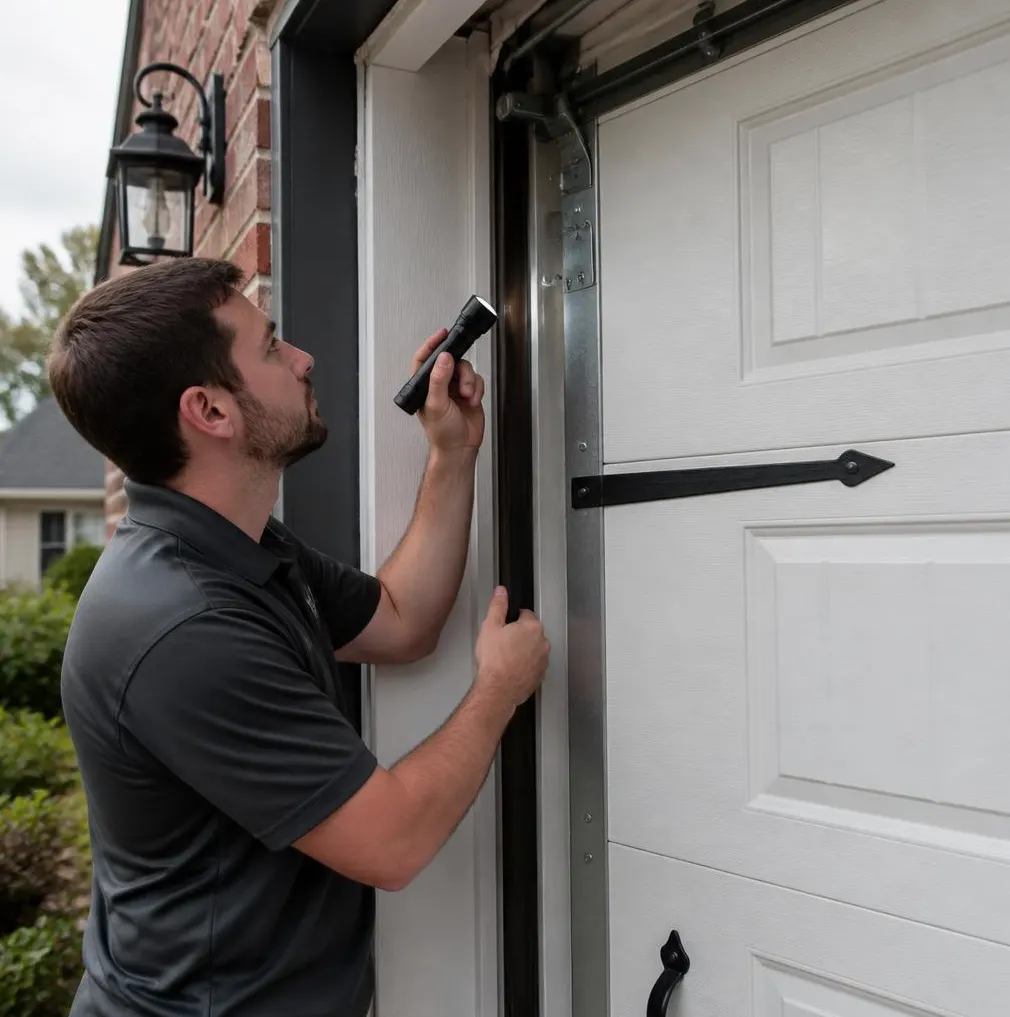
What a Technician Sees on This Call
The call usually starts the same way: the door jerks partway up, then hesitates, or it closes crooked with one side dropping faster than the other. Sometimes there's a grinding or popping noise right as the door passes a certain point on the track. By the time a technician gets out to look, the homeowner has often already noticed a gap between the rollers and the track, or seen the door come off the track entirely during a cold snap. In this part of Michigan, these calls pick up heavily from late fall through the spring thaw, when snow, ice, road salt, and shifting ground all put extra stress on a system that's supposed to run dead straight.
Symptoms That Point to a Track Problem
- The door jerks, shudders, or hangs up at the same spot every time it opens or closes.
- Grinding, squealing, or a metallic scraping sound as the rollers pass a certain section of track.
- The door closes unevenly, with one corner touching down before the other, or it doesn't sit flush against the weatherstripping.
- Visible daylight or a gap between the roller and the track, especially near a bend or a bracket.
- The door reverses on its own partway through a cycle because the opener senses resistance.
- A roller has popped out of the track or the door has come off the track altogether, usually after it got stuck and someone forced it.
None of these symptoms are something to push through. A door fighting a bent track puts extra strain on the opener, the springs, and the cables, and any of those can fail next if the track issue sits unaddressed through a hard winter.
Causes, in the Order a Technician Checks Them
1. Impact Damage
This is the first thing a technician looks for because it's usually visible. A car bumper backing in too far, a snowblower or shovel handle catching the rail, or a ladder leaned against the track during fall gutter cleaning can all knock a section out of true. The fix depends on how bad the bend is: a minor kink can sometimes be straightened in place with a rubber mallet and a level to check it's back to plumb. A sharper bend, especially near a joint or bracket, usually means cutting out and replacing that section of track rather than risking it failing again under load.
2. Loose or Shifted Mounting Hardware
Tracks are held to the door frame and wall studs with brackets, and those brackets can work loose over time from vibration, or pull away from aging wood framing. In homes around Memphis, MI, the freeze-thaw cycle through winter and the spring mud season can cause slight shifts in the garage structure itself, which is enough to pull a bracket a fraction of an inch out of position. A technician checks every bracket along both tracks, tightens or re-sets the ones that have backed out, and re-anchors any that have pulled loose from the stud behind the drywall.
3. Ice and Debris Buildup in the Track
Before assuming a track is actually bent, a technician checks for packed ice, road salt residue, or hardened grime sitting inside the channel. This is common here because cars track in slush and salt all winter, and that moisture refreezes overnight right inside the track where the rollers ride. It can mimic the symptoms of a bent track — jerking, grinding, uneven closing — without any physical damage at all. The fix here is straightforward: clean the track out, dry it, and apply a light garage-door-specific lubricant rather than a heavy grease that will just collect more grit.
4. Seasonal Shifting of the Garage Structure
If the hardware and track both check out but the door still runs rough, the next thing to check is whether the frame itself has moved. Frost heave under a slab, a spring thaw that softens the ground unevenly, or humid summer swelling in wood framing can all nudge a garage opening slightly out of square over a year. This doesn't bend the track so much as it pulls the whole track assembly out of alignment with the door. The fix is to re-level and re-square the tracks against the current frame position, which sometimes means adjusting the track spacing rather than replacing parts.
5. Worn Rollers Riding the Track Edge
Last on the checklist, because it's the least obvious: rollers that are worn down or cracked can ride against the lip of the track instead of rolling smoothly inside it, wearing a groove into the track edge over months. This looks like a track problem but is really a roller problem. Swapping worn rollers for new ones, nylon rollers hold up well against Michigan's temperature swings, usually solves it without touching the track at all.
When to Call Memphis Garage Door
If the door is grinding, hanging up, or sitting crooked, it's worth having it looked at before the next deep freeze rather than after a cable snaps or a panel gets damaged from forcing a stuck door. Our garage door repair service covers everything from straightening or replacing a damaged track section to resetting brackets and re-squaring the assembly against the frame. If the door has been fine but hasn't had a real look-over in a while, our garage door maintenance visits catch loose hardware, worn rollers, and ice-related buildup before they turn into a jerking, grinding door in January.
If your garage door in Memphis, Richmond, Emmett, Yale, Armada, Capac, Almont, or New Haven is sticking, grinding, or closing crooked, call Memphis Garage Door and we'll get it running straight and quiet before winter takes it further out of line.